If the human body were a sports team, the shoulder would be one of your star players; an athlete with the incredible stats, capable of a range of motion that no other joint in the body can match. It allows you to reach, lift, throw, and rotate with impressive freedom. But as any coach knows, the highest-performing players are often the most prone to injury.
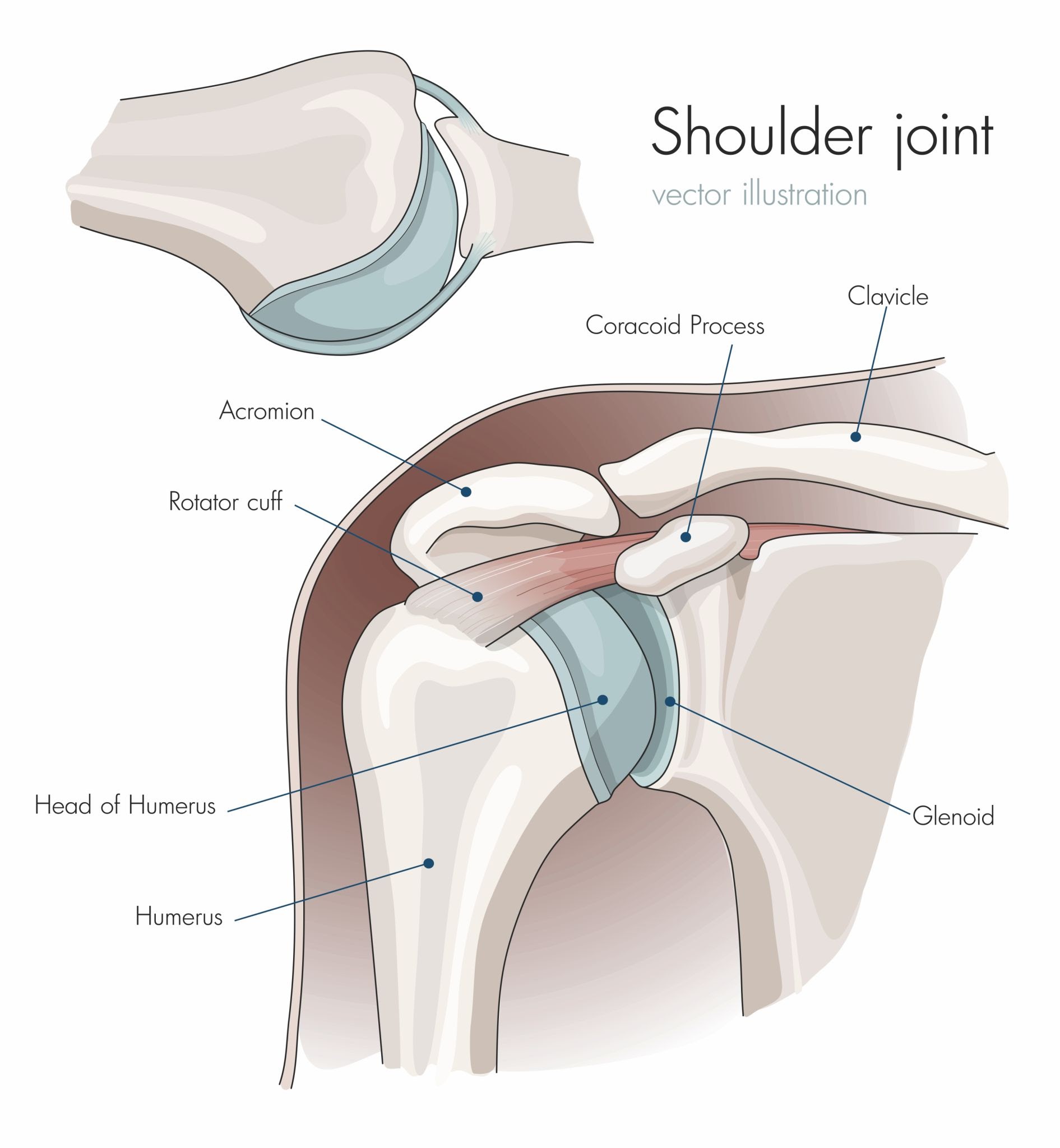
In the shoulder, high mobility comes with a cost: high instability. While often described as a "ball and socket" joint, your shoulder is actually more like a golf ball balancing on a tee. It relies almost entirely on a complex team of soft tissues—the rotator cuff muscles and tendons—to keep it centered.
(Image Credit : Getty Images)
When that team gets overworked or fatigued, the star player starts to struggle. We frequently see the "fraying of the ropes" known as rotator cuff tears, or the stiffness of a "frozen shoulder," where the joint capsule essentially refuses to take the field. And, of course, there is the natural wear-and-tear of osteoarthritis that comes after seasons of play.
However, treating shoulder pain requires more than just looking at the shoulder. At Connecticut's Best Acupuncture, patients often come in convinced they have a shoulder injury because that is where the pain is located. While the shoulder itself may indeed be the issue, sometimes, the shoulder is innocent; the culprit could actually be the neck.
Nerves exit your cervical spine and travel down into your shoulder and arm. If a nerve is pinched in your neck, your brain may interpret that signal as pain in your shoulder blade or deltoid.
Think of it like a flickering lamp in your living room. You can change the lightbulb (treat the shoulder) as many times as you want, but if the issue is faulty wiring in the wall switch (the neck), the light will never stop flickering. Treating the symptom location rather than the root cause is a waste of your time and resources.
This is why "standard treatment" often fails to yield long-term results. If a provider simply places acupuncture needles where it hurts, they might just be changing a lightbulb on a faulty circuit.
At Connecticut's Best Acupuncture, we don't rely on a single approach. We audit the entire system—combining modern orthopedic assessment with a variety of treatment techniques—to differentiate the root cause from the symptom. Then, we use a wide variety of treatments, both ancient and cutting edge. We tend to get results that excel beyond standard acupuncture because we don't just treat the alarm that is ringing; we find the fire.
How long have you been trying to "manage" a nagging pain yourself, assuming you know exactly what the problem is? Isn't it time you made your health a priority and started feeling better?
Test your range of motion today. Stand with your back against a wall. Can you raise both arms up to touch the wall behind you without your back arching? If one arm gets stuck or feels heavy, you are losing mobility. Don't wait for it to freeze completely—address the issue before you're forced to sit on the bench.

© 2025 Connecticut's Best Acupuncture, LLC


